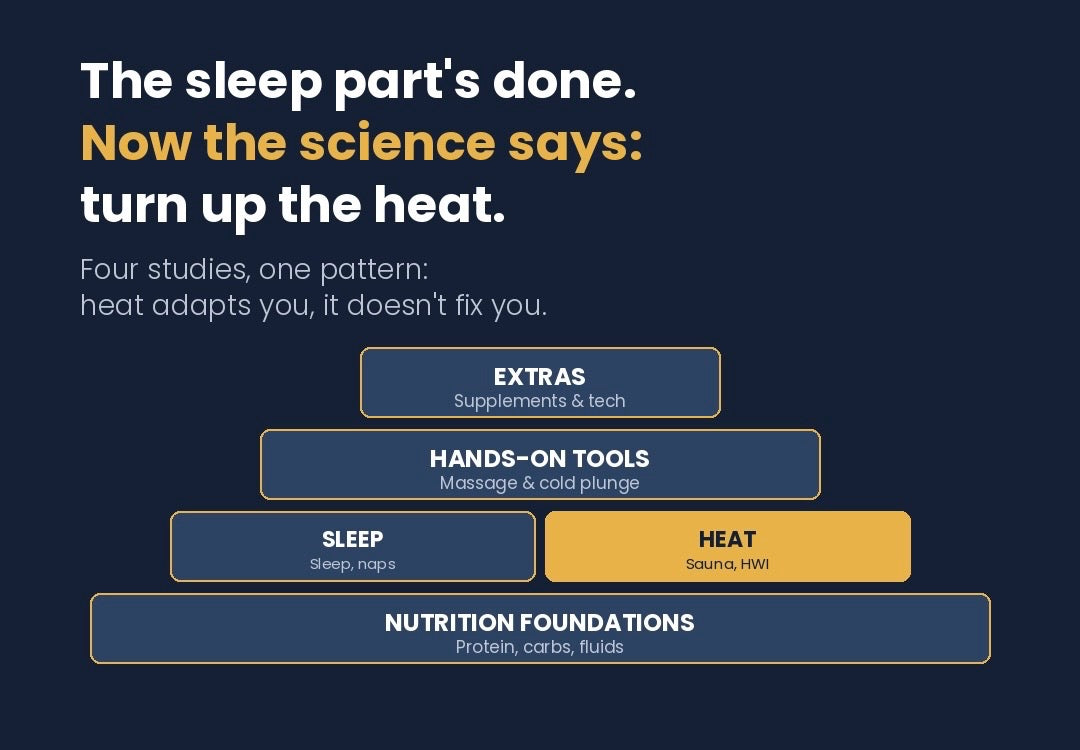
Last week, we turned up the heat. The week before that? Sleep. The week before that was our foundational pyramid of recovery, built on sleep, protein, carbs - all of these readings can be found here: https://addralabs.com/blogs/blog
But this week, we’re getting hands-on.
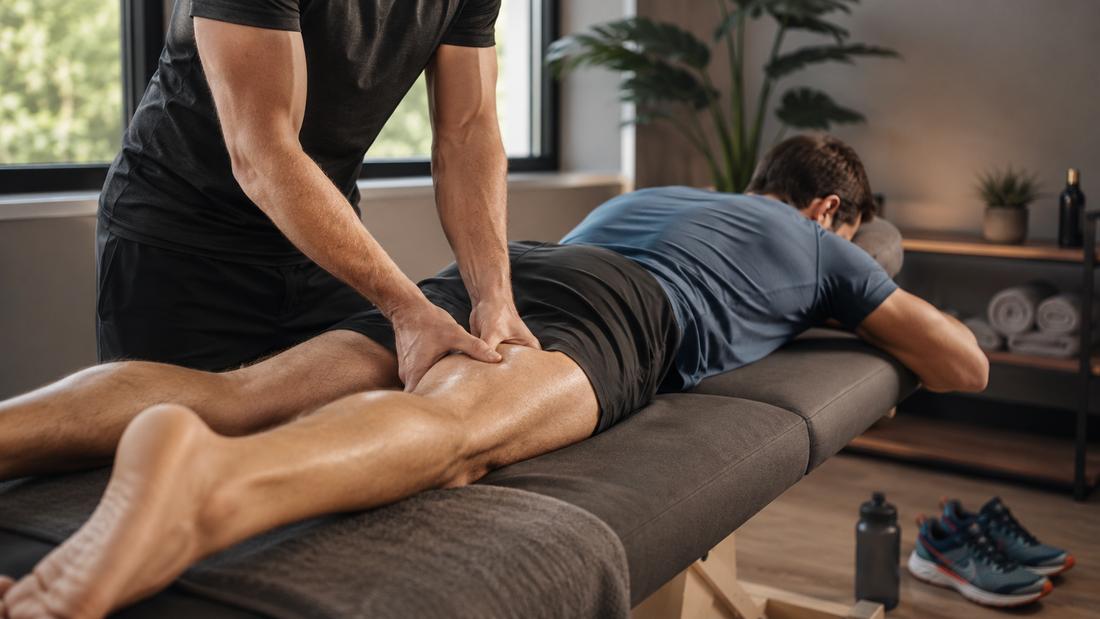
Massage might be one of the oldest tools in the recovery playbook. Finish a race, bury yourself in a training block, wake up with sore legs — and getting on a massage table can feel like an obvious next step.
And, often, you walk away feeling better - but here’s the question:
Did your muscles actually recover faster, or do they just feel like they did?
As we continue working our way up the Addra Labs Recovery Pyramid, that distinction becomes increasingly important. Nutrition and sleep form the foundation because they directly support the processes underlying recovery and adaptation. Tools farther up the pyramid can still be useful — but their effects tend to become more specific.
Massage is a perfect example.
The evidence suggests massage probably won't restore your athletic performance faster, but it may make recovery feel considerably better - and that's worth understanding.
29 Studies, 1,012 Athletes — and Basically No Performance Benefit
Let's start with the big picture.
A systematic review and meta-analysis examined 29 controlled studies involving 1,012 participants to determine whether sports massage actually improves performance and recovery. When researchers looked at strength, sprint, jump and endurance performance, they found no meaningful overall benefit from massage.
That's an important finding because soreness and performance aren't necessarily the same thing. You can get off a massage table feeling looser, lighter and considerably less beat-up without your muscles suddenly becoming better prepared to produce force, sustain power or run faster.
In other words: Feeling recovered isn't always the same thing as being recovered.
What About “Flushing Out” Lactate?
Here's another explanation you've probably heard:
Massage helps “flush” lactate and other metabolic byproducts out of tired muscles.
It sounds intuitive. Someone physically manipulates the muscle, circulation increases, the bad stuff gets pushed out and recovery accelerates. There's just one problem with this:
The research doesn't support that explanation particularly well.
Massage has not consistently been shown to improve lactate clearance following exercise. Active recovery — continuing to move easily after hard exercise — may actually be more effective when lactate clearance itself is the goal. Similarly, massage has not demonstrated a clear ability to meaningfully reduce post-exercise inflammation.
That doesn't make massage useless. It just means we need a better explanation for why so many athletes swear by it, and this is where the evidence gets much more favorable.
Massage Can Make You Less Sore
While massage doesn't appear to meaningfully improve subsequent athletic performance, the research does suggest a modest improvement in delayed-onset muscle soreness, or DOMS.
The meta-analysis found an improvement in soreness scores of approximately 13%. That's not an enormous physiological transformation, but imagine waking up the morning after a huge training session and feeling 13% less sore.
Most athletes would happily take that. I know I would...
This is the nuance that often gets lost when discussing recovery modalities. A tool doesn't need to increase VO2 max, restore glycogen or magically repair muscle damage to have value. Reducing soreness and improving an athlete's perception of recovery can still make the days following hard training more comfortable, and after really extreme endurance efforts, that effect may become even more noticeable.
What Happens After an Ironman?
One study looked at 74 Ironman triathlon finishers and compared athletes receiving quadriceps massage with those who didn't.
The massage group reported less pain and fatigue.
Another study examined 72 finishers of a 100-mile ultramarathon. Again, massage produced a significant reduction in perceived fatigue compared with passive rest.
Think about the magnitude of those events.
An Ironman or 100-mile race creates an enormous amount of muscular, metabolic, and psychological fatigue. No 20-minute massage is going to erase that damage.
But making an athlete feel noticeably better afterward?
That's a legitimate benefit, and it also reinforces the larger lesson:
Massage appears to influence perceived recovery more consistently than actual performance recovery.
Before a Race? Be Careful.
If massage makes us feel loose and relaxed, should we use it immediately before competition? Probably not as a replacement for a traditional warm-up.
Research examining pre-event massage has found slower sprint performance compared with an active warm-up. That doesn't mean you need to panic if a therapist works on a tight spot before your race.
It means the goal immediately before competition is different from the goal afterward. Before competition, you want to increase muscle temperature, activate the neuromuscular system and prepare your body to produce force. That's what a good warm-up does.
A long, relaxing massage isn't necessarily accomplishing the same thing.
So before the gun goes off:
Prioritize movement. Save the recovery massage for afterward.
So, Does Massage Work?
It depends entirely on what you mean by “work.”
If you're expecting massage to accelerate lactate clearance, dramatically reduce inflammation, or restore your ability to perform?
The evidence isn't particularly convincing. If you're expecting massage to help reduce soreness, decrease perceived fatigue and make your body feel better after demanding training?
Now we have something.
That's an important distinction within the Recovery Pyramid.
The higher we move up the pyramid, the less we're talking about fundamental requirements for recovery and the more we're talking about tools that may complement those fundamentals. Massage can be one of those tools.
And What About Foam Rolling?
Not everyone has regular access to a massage therapist. Most athletes, however, can find a foam roller, and the basic story is fairly similar.
Foam rolling can be thought of as a form of self-myofascial release — essentially a DIY approach to some of the mechanical pressure provided during massage.
The research suggests foam rolling may help temporarily reduce feelings of soreness and stiffness and can potentially improve range of motion without meaningfully impairing performance. That can make it useful both around training and as part of an athlete's general mobility routine.
But, again, expectations matter. Spending 30 minutes attacking every sore muscle with a foam roller doesn't mean you've accelerated the underlying biological processes responsible for recovery.
If five or 10 minutes of rolling helps you move better or feel less stiff?
Great - use it! We're all for that!
Just don't confuse discomfort on a foam roller with productive recovery.
Where Massage Fits in the Recovery Pyramid
This brings us back to the pyramid itself.
At the bottom are the things you cannot shortcut: Nutrition. Sleep. Nomio -- err, whoops, looks like Ben slipped that in...
Those pieces (sans Nomio, sadly for Ben's sake) are fundamental because recovery requires energy, nutrients, hydration, and time.
As we move higher, modalities like heat and massage can be layered onto that foundation for more specific purposes. Heat exposure, as we discussed last week, may actually function more like an additional training stimulus, producing adaptations after repeated exposure.
Massage is different.
Its strongest argument isn't necessarily that it changes your physiology.
It's that it changes how you feel.
And that's OK. Recovery doesn't have to be miserable to be effective.
The Bottom Line
Massage isn't magic. It doesn't appear to meaningfully improve subsequent strength, sprint, jump or endurance performance. It probably isn't “flushing lactate” from your muscles, either.
But massage can modestly reduce soreness and perceived fatigue, including after demanding endurance events. That's enough to earn it a place in the recovery toolbox.
Just keep the hierarchy straight.
Fuel first. Sleep. Hydrate. Give your body time.
Then, if getting on the massage table — or spending a few minutes with a foam roller — makes your sore legs feel better? Go for it.
Because sometimes feeling better is the benefit.
References
Davis HL, Alabed S, Chico TJA. Effect of sports massage on performance and recovery: a systematic review and meta-analysis. BMJ Open Sport & Exercise Medicine. 2020.