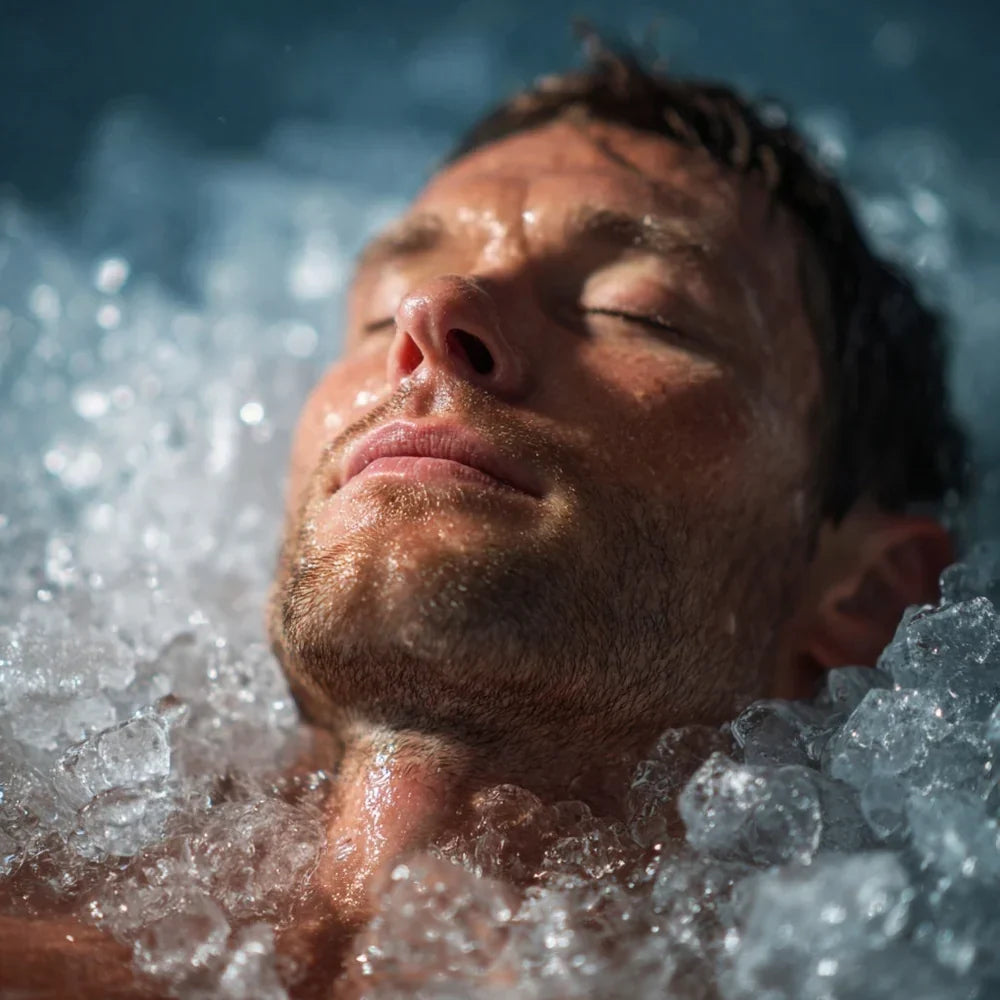
Cold plunges have become almost synonymous with recovery.
Scroll through enough athlete content and you’ll see the routine: finish a hard session, climb into freezing water, grimace for the camera and emerge — supposedly — more recovered than before.
There’s just one problem with that.
“Recovery” can mean a lot of different things.
Across 52 trials examining cold-water immersion, researchers found a fairly consistent signal: cold exposure can help reduce muscle soreness, improve how recovered athletes feel, and restore measures of muscular power following exercise. Sounds great, right?
Well, what if you’re an endurance athlete, hoping a cold plunge will magically raise your FTP, improve your threshold pace, or build aerobic fitness?
That’s a different story...
Power isn’t your FTP
When researchers report improvements in “power” following cold-water immersion, they’re generally talking about explosive muscular power: things like jump height, sprint speed, or the ability to produce a hard kick.
That’s different from sustained cycling power or endurance performance.
A 2022 systematic review and meta-analysis by Moore and colleagues found that cold-water immersion can improve several markers of recovery after strenuous exercise, particularly muscle soreness and measures of muscular power.
A 2024 review involving roughly 1,100 endurance athletes found a similar pattern across cryotherapy methods, including cold-water immersion, cryotherapy chambers, and ice applications: cold appears particularly useful for soreness and short-term recovery of power.
What it does not consistently do is improve endurance performance itself.
That distinction matters.
If you have another hard session tomorrow, being less sore and regaining some neuromuscular snap can be useful. But that doesn’t mean sitting in 50-degree water is building your aerobic engine, persay.
The dose matters
More suffering is not necessarily more recovery.
The research generally points toward relatively short bouts of cold-water immersion rather than turning recovery into a hypothermia contest.
A useful practical starting point is:
45–55°F for approximately 5–12 minutes.
That’s cold enough to produce the desired physiological response without requiring an unnecessarily long exposure - and there’s another reason not to overdo it: the initial gasp reflex is real. Enter cold water gradually, control your breathing, and give your body a moment to adjust.
Timing matters, too.
Cold exposure can temporarily reduce muscular power immediately afterward. In other words, don’t climb out of an ice bath and expect to hit your best intervals five minutes later. (We're not entirely sure why you might be hitting an ice bath straight into a session of 5x5min on the bike, but if you are...maybe don't?)
When should an endurance athlete use it?
Think of cold as tactical recovery.
Imagine you’re at a training camp. Saturday includes a five-hour ride followed by a hard brick run, and Sunday morning brings another key session. That’s where a cold plunge starts making sense.
The same could apply during a big training weekend, a stage race, or another compressed period in which your goal is to recover quickly enough to perform again.
Research has also found benefits to recovery when athletes face repeated bouts of strenuous exercise on consecutive days. So rather than automatically plunging after every workout, save it for the moments when accelerating short-term recovery actually matters.
What about before a race?
This is where the timing gets more nuanced.
Cold can be useful around competition — particularly when heat management is part of the equation — but prolonged or aggressive cooling immediately before an explosive effort can work against you by reducing muscle temperature and acute power production.
For endurance athletes, the practical takeaway is simple: don’t introduce a heroic new cold-plunge protocol on race morning. If cold exposure is part of your routine, use a familiar protocol and leave enough time to fully warm up afterward.
Cold and heat aren't opposites
Previously, we looked at heat exposure as a recovery and adaptation tool. That might make cold plunging seem contradictory.
It isn’t.
They simply serve different purposes. Heat is something you can deliberately build into a training block, particularly when preparing for competition in hot conditions or targeting heat acclimation. You might have seen athletes running in suits, overdressed outfits, or multiple layers when it's not cold out - that's a prime example of developing more blood plasma production to benefit an athlete's future ability to run in higher heat exposure.
Cold is more tactical. Reach for it when another demanding day is coming, and short-term recovery matters more than maximizing every possible training adaptation.
That distinction is important because routinely blunting the stress created by training isn’t always the goal. Training works because the body is forced to adapt. Sometimes you want to recover as quickly as possible, but sometimes you want to let training do its job.
Where cold belongs on the recovery pyramid
Cold plunges sit above the fundamentals for a reason.
Before worrying about water temperature, make sure you’re doing the things with a much larger impact on recovery:
Eat enough. Replace carbohydrates. Get adequate protein. Rehydrate. Sleep.
Then start worrying about the recovery tools layered on top.
Cold-water immersion is one of the more evidence-supported options in that toolbox. Used strategically, it can reduce soreness, improve perceived recovery, and help restore muscular power when training days begin stacking up. Just don’t confuse feeling fresher with becoming fitter.
The cold plunge works. The trick is knowing what you’re asking it to do.